Substation Technician
What Does a Substation Technician Do?
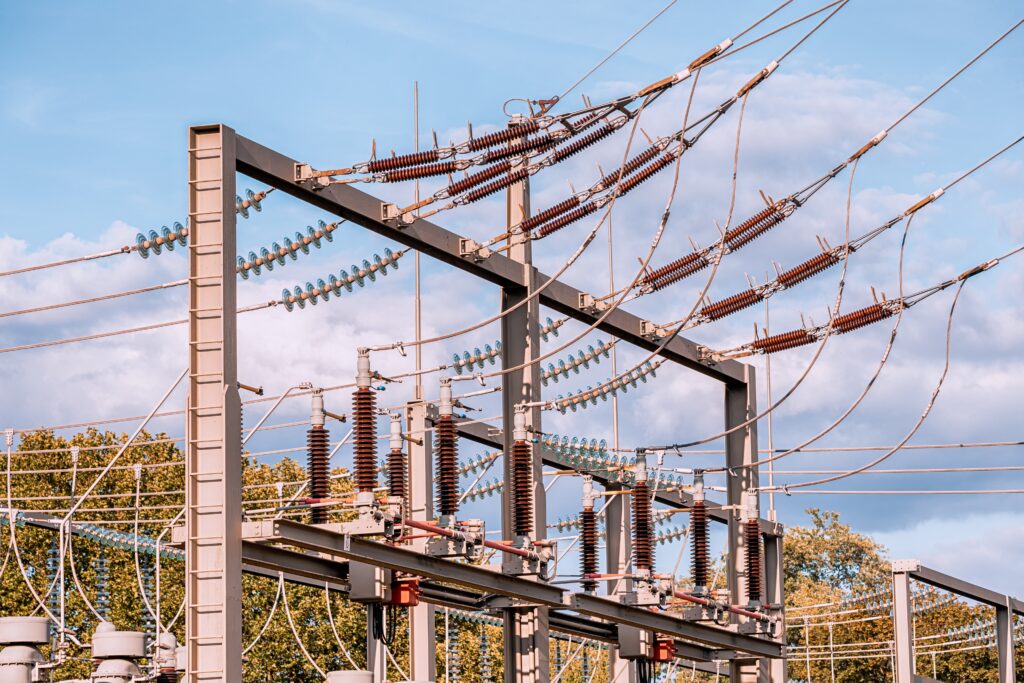
Substation technicians build, install, maintain, and repair the high-voltage equipment and structures used to control, transform, protect, and route electricity between transmission and distribution systems.
Their work includes constructing grounding systems and foundations; installing structural steel, control houses, transformers, circuit breakers, conduit, bus systems, cables, and switches; and completing the connections that allow substations to safely serve homes, businesses, hospitals, public facilities, and other critical infrastructure.
Substation work is hands-on and primarily performed outdoors at utility substations and construction sites. Technicians may work around high-voltage equipment, heavy machinery, trenches, structural steel, and changing weather conditions.
Basic Tasks
Construct and connect protective grounding grids for substation electrical systems, control cabinets, transformers, control houses, fencing, and steel structures.
Grounding systems help protect workers, equipment, and the public from hazardous electrical voltage.
Prepare and install foundations for transformers, circuit breakers, control cabinets, control houses, and structural steel.
This work may include:
- Excavating and trenching
- Installing rebar
- Placing conduit
- Locating existing utilities
- Preparing forms
- Assisting with concrete placement
Lay out and construct security fencing and protective barriers around substations.
Fencing protects the public from high-voltage equipment and helps secure critical electrical infrastructure.
Read and interpret:
- Construction drawings
- Blueprints
- Electrical diagrams
- Equipment specifications
- Utility standards
- Site plans
Use those documents to determine equipment placement, elevations, clearances, conduit routes, and construction requirements.
Install, identify, code, route, and terminate cables used for:
- Equipment control
- System monitoring
- Communications
- Protective relaying
- Alarms
- Substation lighting
- Connections between field equipment and control houses
Assemble and erect steel support structures used to hold high-voltage electrical equipment.
Assist with constructing or installing control houses that contain monitoring, communication, protection, and switching systems.
Assist with the installation, connection, inspection, servicing, and replacement of:
- Power transformers
- Instrument transformers
- Circuit breakers
- Voltage regulators
- Protective equipment
- Associated substation components
This work may be performed during new construction, system expansion,
Measure, bend, assemble, and install conduit and rigid bus systems.
These systems provide protected cable pathways or electrical connections between transmission lines, distribution lines, transformers, circuit breakers, switches, and other substation equipment.
Install suspended conductor or wire bus used to make high-voltage connections between major pieces of substation equipment.
This work requires accurate measurement, proper tensioning, secure connections, and compliance with required electrical clearances.
Perform or assist with welding used to connect conduit, aluminum bus, structural components, and other substation materials.
Technicians may learn multiple welding techniques depending on the material, equipment design, and employer requirements.
Assemble, install, align, adjust, and maintain switching equipment used to control the transmission and distribution of high-voltage electricity.
Switches must be installed precisely so they operate safely, reliably, and in accordance with utility specifications.
Safety and Regulations
Substation technicians work in environments containing high-voltage electrical equipment and potentially energized circuits. Safety procedures must be followed during every phase of construction, maintenance, and operation.
Apprentices learn to:
- Recognize electrical and construction hazards
- Maintain required approach distances from energized equipment
- Use appropriate personal protective equipment
- Follow protective grounding procedures
- Participate in job briefings and pre-task planning
- Follow equipment-clearance and switching instructions
- Use tools, rigging, and construction equipment safely
- Follow employer, utility, apprenticeship, and OSHA safety requirements
- Maintain a clean and controlled work area
- Stop work and report unsafe conditions
Safety, communication, and crew coordination are essential because substation work frequently involves multiple crafts, heavy equipment, elevated structures, and high-voltage systems.
Work Environment
Substation technicians should be prepared to:
- Work outdoors throughout the year
- Work in heat, cold, rain, mud, and other changing conditions
- Stand, bend, kneel, climb, lift, carry, and work for extended periods
- Work around trenches, foundations, steel structures, and heavy equipment
- Wear required personal protective equipment
- Travel throughout SELCAT’s southeastern jurisdiction
- Report to different contractors and job locations during the apprenticeship
- Work overtime or changing schedules when project conditions require it
Who Can Apply?
VEEP Substation Pathway Eligibility
Applicants must meet the following VEEP pathway requirements:
- Active Duty ONLY
- Residency is required
- Applicants must reside in one of the following states:
- Alabama
- Arkansas
- Florida
- Georgia
- Louisiana
- Mississippi
- North Carolina
- South Carolina
- Tennessee
- Applicants must obtain the required military authorization to participate
- Applicants must be available to complete the full six-week training program
- Applicants must meet VEEP and SELCAT application, selection, and apprenticeship-entry requirements
Minimum Requirements
Age
Applicants must be at least 18 years old before entering the registered apprenticeship.
Education
Applicants must have:
- A high school diploma or GED
- An official high school transcript
- Evidence of successful completion of one full credit of high school algebra, a qualifying postsecondary algebra course, or the electrical training ALLIANCE Online Tech Math course
GED applicants may also be required to provide their test scores.
Residency
Applicants must reside within SELCAT’s nine-state jurisdiction or will reside after exiting the military.
- Alabama
- Arkansas
- Florida
- Georgia
- Louisiana
- Mississippi
- North Carolina
- South Carolina
- Tennessee
Proof of residency is required under SELCAT’s standard apprenticeship application process.
Computer and Internet Access
Applicants must have:
- Access to a computer
- Reliable internet access
- A current email address that is checked regularly
Online coursework, program communication, application documents, and apprenticeship instruction may be delivered electronically.
Ability to Travel
Applicants must be willing to travel and accept work assignments anywhere within SELCAT’s jurisdiction during the registered apprenticeship.
The apprenticeship is not limited to the training location or the participant’s home city.
Physical Ability
Applicants must be capable of performing physically demanding construction work, including:
- Lifting and carrying tools and materials
- Standing or walking for extended periods
- Bending, kneeling, and climbing
- Working around excavations and uneven terrain
- Working in outdoor environments
- Wearing personal protective equipment
- Working safely around heavy equipment and high-voltage facilities
Interested in
Participating In Veep?
Find a Cohort Near You
Ready for that next step? Click the link below to view upcoming Cohorts for Substation Technicians.